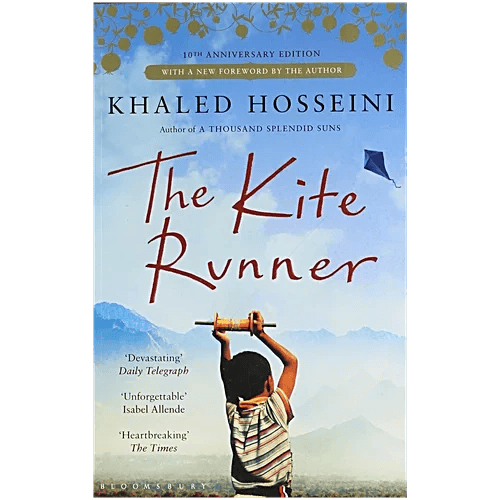
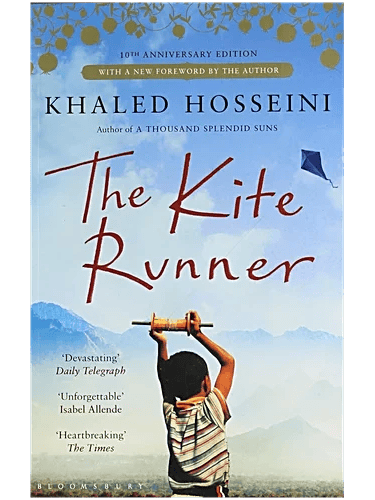
The Kite Runner
The Kite Runner is a powerful and emotional novel written by Khaled Hosseini. The book was first published in 2003 by Riverhead Books. It quickly became very popular and was loved by readers around the world. The novel tells a deep and touching story about friendship, betrayal, guilt, forgiveness, and redemption. It also gives readers a picture of life in Afghanistan before and after war.
Khaled Hosseini is a well-known Afghan-American author and physician. He was born in Kabul, Afghanistan, in 1965. Later, moved to the United States because of political problems in Afghanistan. Hosseini began writing novels that reflect Afghan culture, traditions, and the struggles of people affected by war and displacement. The Kite Runner is his first novel and remains one of his most famous works. His storytelling is simple yet very emotional, which makes readers feel deeply connected to the characters.
The story of The Kite Runner is mainly about two boys, Amir and Hassan, who grow up together in Kabul, Afghanistan. Amir is the son of a wealthy businessman named Baba, while Hassan is the son of Baba’s servant, Ali. Even though they belong to different social classes, Amir and Hassan spend their childhood together. They play games, explore the streets of Kabul, and especially enjoy flying kites. Kite fighting is a popular sport in Afghanistan, where children compete to cut down each other’s kites. Hassan is extremely loyal and kind. He always supports Amir and stands by him in every situation. Amir enjoys Hassan’s friendship, but at the same time he sometimes feels jealous and insecure. Amir wishes to gain his father Baba’s approval and love. Baba is a strong and respected man, but Amir feels that he does not fully live up to his father’s expectations.
One important event in the story is the kite-fighting tournament. Amir works very hard to win the competition because he believes it will make his father proud and gain his love. Amir finally wins the tournament and feels proud and happy. Hassan helps him by chasing the last cut kite, which is a tradition in kite fighting. However, a tragic event takes place that changes everything. Hassan is attacked by a group of boys led by a cruel boy named Assef, and Amir secretly witnesses it but does not help his friend because he is afraid. This moment becomes the turning point in the story. Amir feels guilty but is too ashamed to admit what happened. His silence leads to the end of his friendship with Hassan. His guilt grows stronger, and he begins to avoid Hassan because Hassan reminds him of his mistake.
Because of Amir’s guilt and confusion, he later treats Hassan badly and even frames him for stealing. As a result, Hassan and his father Ali leave Baba’s house. Amir soon realizes that his actions have deeply hurt someone who was always loyal to him. This guilt stays with him for many years. Soon after this, political problems and war begin in Afghanistan. The country becomes unsafe, and Amir and Baba are forced to leave Kabul. They travel to the United States and start a new life there. In America, Baba works very hard to support himself and Amir. Although their life becomes simpler, Baba continues to teach Amir important values such as honesty and courage. As Amir grows older, he becomes a writer and begins to build his own life. However, he still feels guilty about what happened to Hassan many years ago. One day he receives a phone call from an old family friend named Rahim Khan, who asks him to come back to Pakistan. Rahim Khan tells Amir that there is a way for him to make things right again.
When Amir meets Rahim Khan, he learns the truth about Hassan and his past. He discovers that Hassan had remained loyal to Baba’s house and had lived a difficult life in Afghanistan. Amir also learns that Hassan’s young son, Sohrab, is now alone and in danger. Rahim Khan asks Amir to go to Afghanistan and rescue the boy. Amir decides to go back even under the dangerous conditions. This journey becomes a chance for him to face and to correct his past mistakes. When Amir returns to Afghanistan, he sees how much the country has changed because of war and violence. The city of Kabul is no longer the peaceful place he remembered from childhood. Through this journey, Amir experiences fear, pain, and courage. Eventually, he rescues Sohrab and takes responsibility for the boy’s future. This final part of the story shows Amir’s path toward redemption. He cannot change what happened in the past, but he can choose to do the right thing now. By helping Sohrab, Amir begins to heal from his guilt and prove that people can learn from their mistakes.
One of the main themes of The Kite Runner is friendship and loyalty. Hassan’s loyalty to Amir is one of the strongest parts of the story. Even when Amir fails him, Hassan continues to show kindness and love. Another important theme is guilt and redemption. Amir spends many years feeling guilty about his actions, but the story shows that it is possible to seek forgiveness and make things right. The novel also explores social differences in Afghan society. Amir and Hassan belong to different ethnic groups and social classes. Hassan is a Hazara, a minority group that often faces discrimination and Amir is a Pashtun, the privileged group. Through their relationship, the book shows how unfair social divisions can affect people’s lives. Another important theme is the effect of war and migration. The story describes how political conflict forces many families to leave their homes and start new lives in foreign countries.
One of the reasons The Kite Runner is so powerful is its emotional depth. The story makes readers feel the happiness of childhood, the pain of betrayal, and the hope of forgiveness. Khaled Hosseini writes in a simple and clear style, but his storytelling is very moving. He uses descriptions to show both the beauty of Afghanistan and the suffering caused by war. The characters in the novel are also very memorable. Amir is not a perfect hero. He makes serious mistakes and struggles with fear and guilt. However, his journey toward redemption makes him a realistic and relatable character. Hassan, on the other hand, represents innocence, loyalty, and courage. His character leaves a strong impression on readers. The symbolism of kite flying is another important part of the novel. At the beginning of the story, kite flying represents childhood joy and friendship. Later, it becomes connected with guilt and regret. By the end of the novel, flying a kite again symbolizes hope and healing.
Overall, The Kite Runner is a deeply emotional and powerful novel that explores friendship, guilt, love, and redemption. It tells a story about human weakness, the consequences of our actions, and the possibility of forgiveness. The story shows that even after making mistakes, a person can find a way to seek forgiveness and do good. The novel’s simple language, strong characters, and emotional story make it one of the most memorable books in modern literature. It leaves readers with an important message that it is never too late to make things right and become a better person.
- Khaled Hosseini