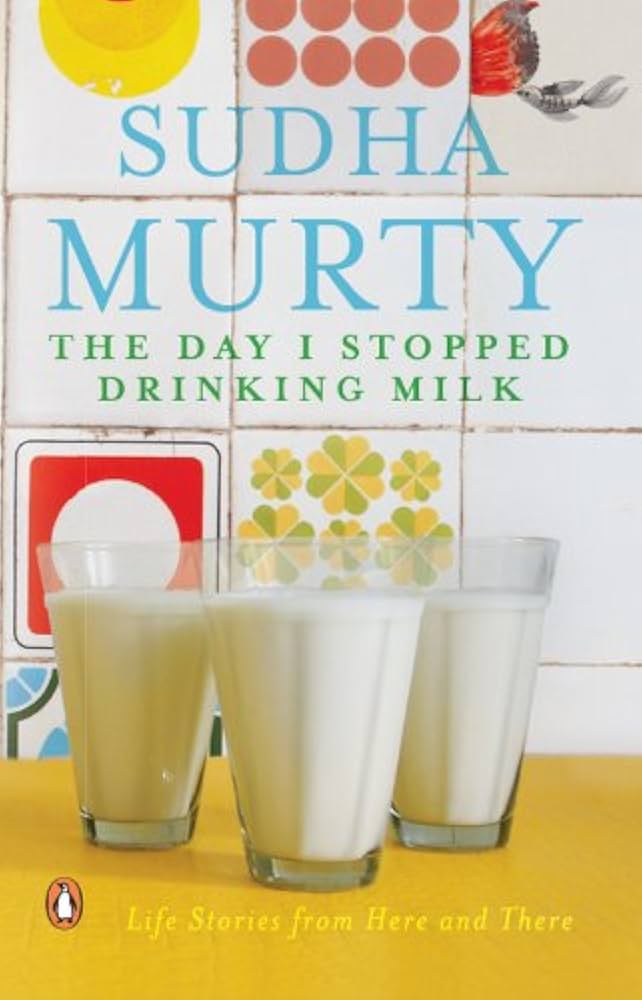
The Day I Stopped Drinking Milk
The Day I Stopped Drinking Milk is a collection of short and inspiring stories written by Sudha Murty. The book is published by Penguin Random House India, a popular publishing company that publishes many popular books by Indian and international authors. Sudha Murty is a well-known Indian author, teacher, and social worker. She is also the chairperson of the Infosys Foundation, which works to help people in need through education, healthcare, and social service. She has written many books for children and adults in English and Kannada. Her stories are often based on real-life incidents and focus on moral values and human relationships. Because of her simple writing style and meaningful ideas, her books are widely read and appreciated by many people. Through her writing, she shares her experiences and encourages readers to think about compassion, honesty, and humility.
The Day I Stopped Drinking Milk is a collection of short real-life stories based on the author’s personal experiences. Each story talks about a different person or situation that the author encountered in her life. Most of these stories are based on her travels and the people she met while working with the Infosys Foundation. The stories are simple, but each one carries an important message. They show how ordinary people can teach us valuable lessons about life. Through these stories, she shares lessons about kindness, honesty, generosity, and the importance of understanding people from different backgrounds. The language used in the book is simple and clear, which makes it easy for readers of all ages to understand and enjoy.
The title story, “The Day I Stopped Drinking Milk,” is one of the most memorable stories in the book. In this story, Sudha Murty visits a poor village during her social work. When she visits a family there, they offer her a glass of milk with great respect and warmth. At first she accepts it politely, but later she realizes that the family has very little milk for themselves, yet they offered it to her as a sign of respect and hospitality. By giving it to her, they are sacrificing something important for their own children. This realization makes her feel deeply touched and also a little guilty. She understands how generous and hospitable poor people can be even when they have very little. This experience teaches her an important lesson about gratitude, humility, and understanding the value of what others give us. After this incident, she decides to stop drinking milk because she cannot forget the sacrifice of that family.
The story that attracted me the most was “Genes” which is one of the most thoughtful stories in the book. In this story, Sudha Murty reflects on how honesty, kindness and integrity cannot simply pass through genes but through upbringing and personal choices. She meets people from different backgrounds and realizes that values are not inherited automatically. They are learned through experiences, environment, and personal choices. The story clearly shows that character is built by actions, not by family name or wealth. It teaches that every person is responsible for shaping their own values through their actions.
Another interesting story in the book is “Bombay to Bangalore.” This story talks about a young girl who travels from a big city to a new place in search of a better life. The girl faces many struggles but remains determined and hardworking. She manages to overcome difficulties and build a successful future. The story highlights how small acts of encouragement and support from others can change someone’s life. It also reminds readers that success often comes through patience and perseverance.
The story “Rahman’s Avva” is another touching story in the book. It tells about an old woman who lovingly raises a boy who belongs to a different religion. She treats him with care and affection just like her own child. The story shows that love and kindness are more important than differences in religion, culture, or background. It teaches readers that humanity should always come before social divisions.
The story “Ganga’s Ghat” talks about a village woman named Ganga who begins helping people in small ways. She starts by giving warm water and simple help to those who need it. Slowly, more people begin to depend on her kindness. Through her actions, she finds happiness and purpose in life. The story shows that even small acts of service can bring great satisfaction and respect. It teaches that helping others is one of the greatest ways to find meaning in life.
There is also a story called “Helping the Dead,” which describes how some young people decide to help poor families who cannot afford funeral expenses for their loved ones. Instead of ignoring the problem, these young volunteers take responsibility and help conduct the final rites with dignity. They do not expect any reward or recognition for their work. This story highlights the importance of compassion and social responsibility. It reminds readers that even simple acts of kindness can make a big difference in someone’s life.
One of the strengths of this book is that the stories are based on real experiences. Sudha Murty writes about people from different backgrounds—rich and poor, educated and uneducated, young and old. Through their actions and decisions, she shows how values like honesty, humility, patience, and generosity shape our lives. These stories show that valuable lessons can be learned from everyday experiences and from meeting different kinds of people.
Another important aspect of the book is its description of Indian society and culture. The author writes about life in villages, the struggles of poor communities, and the strong traditions that exist in many parts of the country. She also writes about the changes taking place in modern India and how people adapt to them. These observations make the book not only inspiring but also informative.
The language of the book is very simple and easy to understand. Sudha Murty writes in a way that is easy to understand, which makes the stories accessible to readers of all ages. Even though the language is simple, the ideas and messages are powerful. The stories encourage readers to think about how they treat others and how their actions affect people around them. They also remind readers that kindness, honesty, and humility are more valuable than wealth or status. The book teaches that true happiness comes from helping others and living a life based on good values.
The book also gives readers a glimpse of different parts of India, including villages and small towns. Through her experiences, Sudha Murty describes the struggles faced by many people and the generosity that often exists even in difficult circumstances. These stories help readers understand the importance of empathy and respect for people from different backgrounds. In addition to teaching moral values, the book encourages readers to look at life from a different perspective. It shows that happiness does not always come from wealth or success. Sometimes it comes from simple acts of kindness, understanding, and gratitude. The stories remind readers to appreciate what they have and to treat others with respect and compassion.
Overall, The Day I Stopped Drinking Milk is a beautiful collection of real-life stories that celebrate human values and compassion. Sudha Murty’s clear and honest storytelling makes the book both enjoyable and inspiring. The lessons in the book encourage readers to live with empathy, gratitude, and integrity. It is a book that reminds us that even the smallest experiences in life can become powerful lessons when we take the time to understand them.
- Sudha Murty