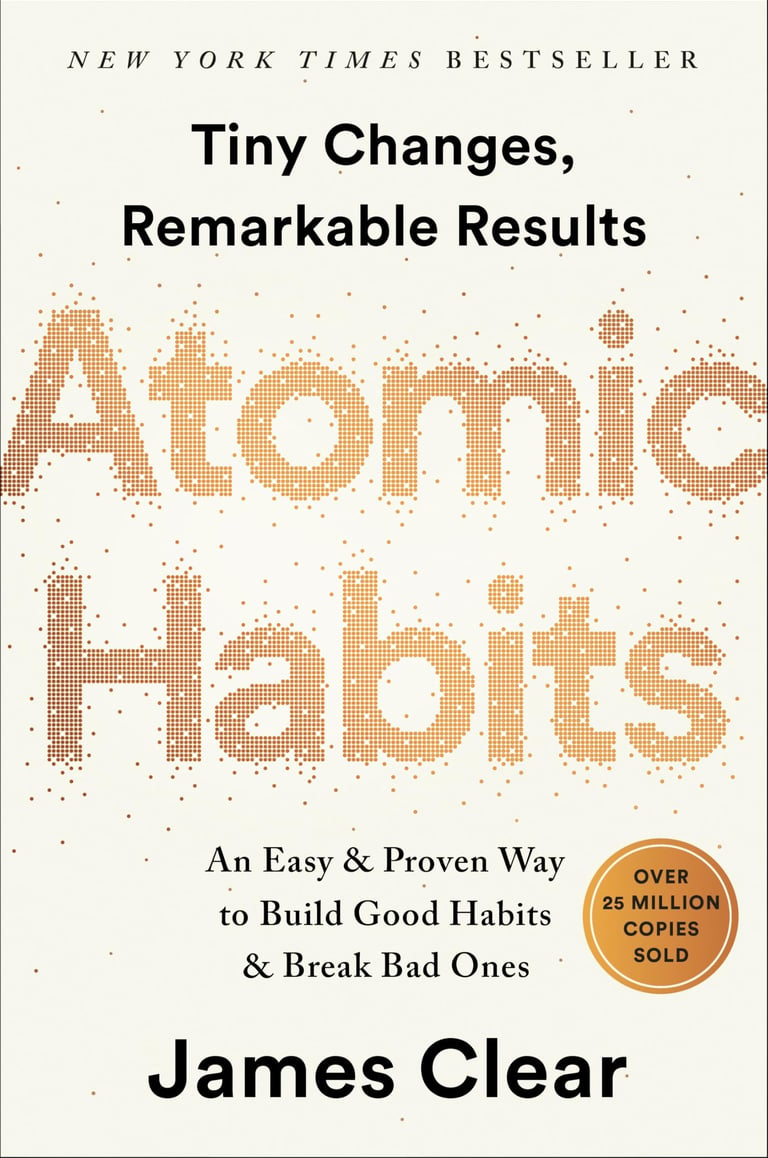
Atomic Habits
Atomic Habits is a popular and powerful self-help book written by James Clear. The book is published by Avery. It was first published in 2018 and has become one of the best-selling books in the world on personal development and habit building. The book focuses on how small habits can lead to big changes in life. It explains that success is not the result of one big action but the result of many small improvements made consistently over time.
James Clear is an American writer and speaker who is well known for his work on habits, decision-making, productivity, and self-improvement. He writes articles and gives talks on how people can improve their lives by making small but meaningful changes. His ideas are based on research from psychology, neuroscience, and behavioral science. Clear became interested in habits after recovering from a serious sports injury during his college years. During that time, he focused on improving himself little by little, and this experience helped him understand the power of small habits. Through Atomic Habits, he shares practical methods that anyone can use to develop good habits and break bad ones.
The main idea of the book is that small habits, when repeated every day, can lead to major improvements over time. The word “atomic” in the title refers to very small changes, but also powerful like tiny particles that together create powerful results. According to the author, improving by just one percent every day can lead to remarkable progress in the long run. This idea shows that small progress is more important than trying to achieve big goals all at once and it helps readers understand that success does not happen suddenly but grows gradually through consistent actions. One of the important concepts explained in the book is the “habit loop.” According to James Clear, every habit has four stages: cue, craving, response, and reward. The cue is the signal that tells the brain to start a behavior. The craving is the desire that motivates the action. The response is the habit itself, and the reward is the benefit gained from performing the habit. Understanding these stages helps people recognize how habits work and how they can change them.
The book introduces the “Four Laws of Behavior Change,” which are simple rules for building good habits and breaking bad ones. The first law is to make the habit obvious. This means creating clear reminders so that the habit becomes easier to remember. For example, if someone wants to start reading every day, they can keep a book on their table so they see it regularly. The second law is to make the habit attractive. When a habit feels enjoyable or rewarding, people are more likely to repeat it. The book explains that connecting a habit with something pleasant can help build motivation. The third law is to make the habit easy. If a habit requires too much effort, people may stop doing it. Therefore, the author suggests starting with very small steps. For example, instead of trying to exercise for one hour every day, a person can begin with just five minutes of exercise. The fourth law is to make the habit satisfying. When people feel good after completing a habit, they are more likely to continue it. Small rewards and positive feelings help strengthen the habit over time.
Breaking bad habits is another important topic discussed in the book. The author suggests reversing the four laws of behavior change to eliminate unwanted habits. To stop a bad habit, a person should make it invisible, unattractive, difficult, and unsatisfying. For example, if someone wants to reduce screen time, they can keep their phone away or turn off notifications. This makes the habit harder to follow and helps in reducing it. Another important idea in the book is the concept of identity-based habits. James Clear explains that lasting change happens when people change their identity rather than only focusing on goals. For example, instead of saying “I want to run a marathon,” a person can think of themselves as “a runner.” When people see themselves in a certain way, their habits naturally support that identity.
The book also discusses the difference between goals and systems. According to the author, goals are the results people want to achieve, while systems are the daily actions that lead to those results. Clear explains that focusing only on goals may not always lead to success. Instead, focusing on the system or daily process is more effective. If a person follows a good system every day, success will naturally follow. Another helpful idea in the book is the concept of habit stacking. This method involves linking a new habit to an existing one. For example, if someone already drinks coffee every morning, they can add a new habit, such as reading a page of a book right after drinking coffee. This technique makes it easier to remember and practice the new habit. Tracking progress is another useful method mentioned in the book. When people track their habits, they can see their improvement and stay motivated. Even small achievements can encourage people to continue their efforts. The book suggests using simple methods like marking a calendar or keeping a habit journal.
The book also explains how the environment influences habits. James Clear suggests designing surroundings in a way that supports good habits. For example, if someone wants to eat healthy food, they should keep fruits and vegetables easily available and remove unhealthy snacks from sight. Small changes in the environment can make good habits easier and bad habits harder. The book also explains that habits take time to form. There is no fixed number of days to build a habit. It depends on the person and the type of habit. The key is to be consistent and patient. Missing a habit once is not a big problem, but repeating the mistake can slow down progress. The book contains many real-life examples from athletes, artists, business leaders, and ordinary people. These examples show how small habits can lead to great achievements. They also help readers understand how the ideas in the book can be applied in everyday life.
One of the strengths of Atomic Habits is its practical advice. Instead of giving complicated theories, James Clear provides simple techniques that anyone can follow. The steps suggested in the book are easy to understand and can be applied to many areas of life such as studying, exercising, working, or improving relationships. The language of the book is very clear and simple. Even though the ideas are based on scientific research, the author explains them in a way that is easy for general readers to understand. The examples and stories make the concepts interesting and relatable.
The book is not only about personal improvement but also about understanding human behavior. It shows how habits are formed and how they can be changed step by step. The lessons in the book can be applied in many areas of life such as studies, health, work, and relationships. Another important message in the book is that failure is a part of the process. People should not feel discouraged if they make mistakes. Instead, they should learn from them and continue improving. The focus should be on progress, not perfection. The book also encourages readers to stay disciplined and focused. Building good habits requires effort and consistency, but the results are worth it. Over time, small habits become part of daily life and lead to big improvements.
Another positive aspect of the book is that it encourages patience and consistency. Many people want quick success, but the book explains that real improvement takes time. By focusing on small daily actions, people can slowly build habits that lead to lasting change. The book also teaches readers to focus on progress rather than perfection. Sometimes people stop trying because they feel they are not improving fast enough. However, Atomic Habits reminds readers that even small improvements are valuable and should be appreciated.
Overall, Atomic Habits is a very helpful and inspiring book for anyone who wants to improve their life. It is a powerful guide to building better habits and achieving personal growth. It teaches that success is not about making huge changes but about making small improvements every day.
- James Clear